· 11 min read
How to Store Spore Syringes for Peak Viability
Refrigerated at 2–8°C (35–46°F), spore syringes stay viable 6–12+ months; at room temperature, about 1–2 months. How to prep, store and spot contamination.
Properly storing your spore syringes is essential for preserving their viability for microscopy and taxonomy. This guide will walk you through the best practices for both short-term and long-term storage, how to prepare your syringes, and common mistakes to avoid. Following these steps ensures your specimens remain contaminant-free and ready for research when you are.
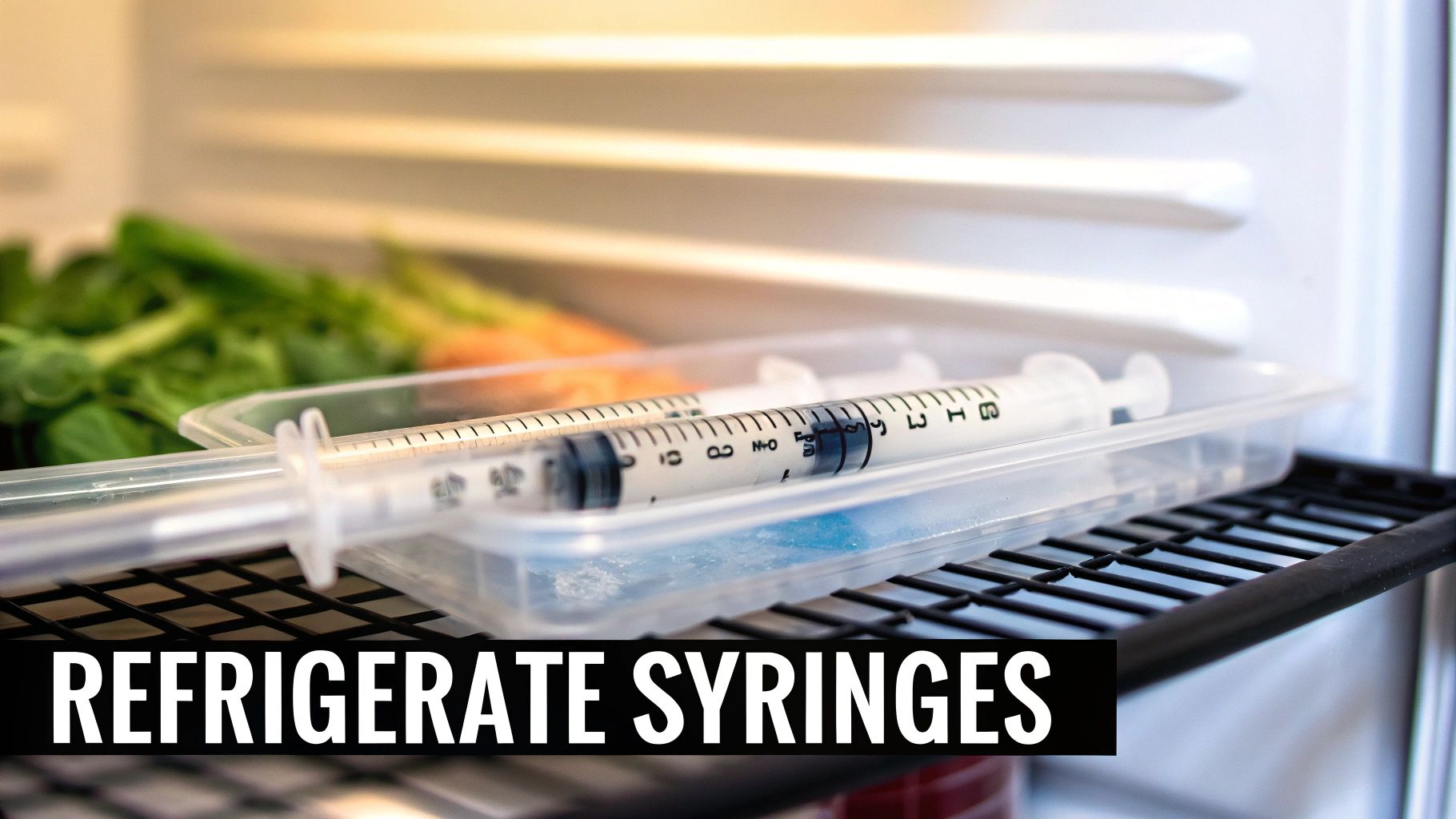
The gold standard for long-term storage is refrigeration. A stable temperature between 2°C and 8°C (35°F and 46°F) is the ideal range to keep spores in a dormant state. While a cool, dark place at room temperature can suffice for a few weeks, cold storage is critical for preserving genetic integrity for any future research.
Understanding Spore Syringe Storage Methods
Proper storage is about more than just preventing spoilage; it’s about safeguarding the delicate genetic material within each spore for accurate scientific study. The primary goal is to create a stable, sterile environment that minimizes metabolic activity, effectively placing the spores in a state of suspended animation until you are ready to begin your research.
There are two primary methods for storing spore syringes: short-term storage at ambient temperature and long-term cold storage. The choice depends entirely on your research timeline.
Ideal Conditions for Storing Spore Syringes
Choosing the correct method is determined by when you plan to use the specimens. If a syringe will be used for microscopy within a month, keeping it in a dark drawer or cabinet is generally sufficient. For any duration longer than that, refrigeration is the most reliable option. This table provides a quick comparison to help you decide.
| Storage Method | Ideal Temperature | Expected Viability | Primary Risk |
|---|---|---|---|
| Short-Term Storage | 18°C–22°C (65°F–72°F) | 1–2 months | Accelerated degradation & potential contamination |
| Long-Term Storage | 2°C–8°C (35°F–46°F) | 6–12+ months | Accidental freezing if refrigerator is faulty |
As shown, refrigeration significantly extends the viable lifespan of mushroom spores, making it the superior choice for researchers building a specimen library or planning future taxonomic studies.
Comparing Short-Term vs. Long-Term Options
If you intend to use a syringe within approximately 30 days, room temperature storage is adequate, provided it is kept away from light and temperature fluctuations. For research planned further out, refrigeration is non-negotiable. It is the only scientifically validated method to reliably halt spore degradation and prevent the growth of contaminants over extended periods.
A well-stored spore syringe can remain viable from one month to over a year, a timeline that depends almost entirely on the storage conditions.
The key takeaway is this: A cold, dark, and stable environment is the optimal formula for spore preservation. This combination minimizes the spores’ metabolic rate and protects their delicate DNA from degradation caused by UV light.
For those building a collection for ongoing study, proper cold storage is a critical investment in the quality of your research materials. Ensuring your high-quality specimens remain pristine allows you to start your microscopy work with the best possible materials, such as those found in a diverse spore syringe collection for research purposes.
All spores are sold for microscopy and taxonomy research purposes only. Cultivation is not permitted where prohibited by law.
Preparing Syringes for Cold Storage
The process of ensuring long-term viability begins the moment your spore syringes arrive. A few preparatory steps can significantly impact their longevity and prevent future research complications.
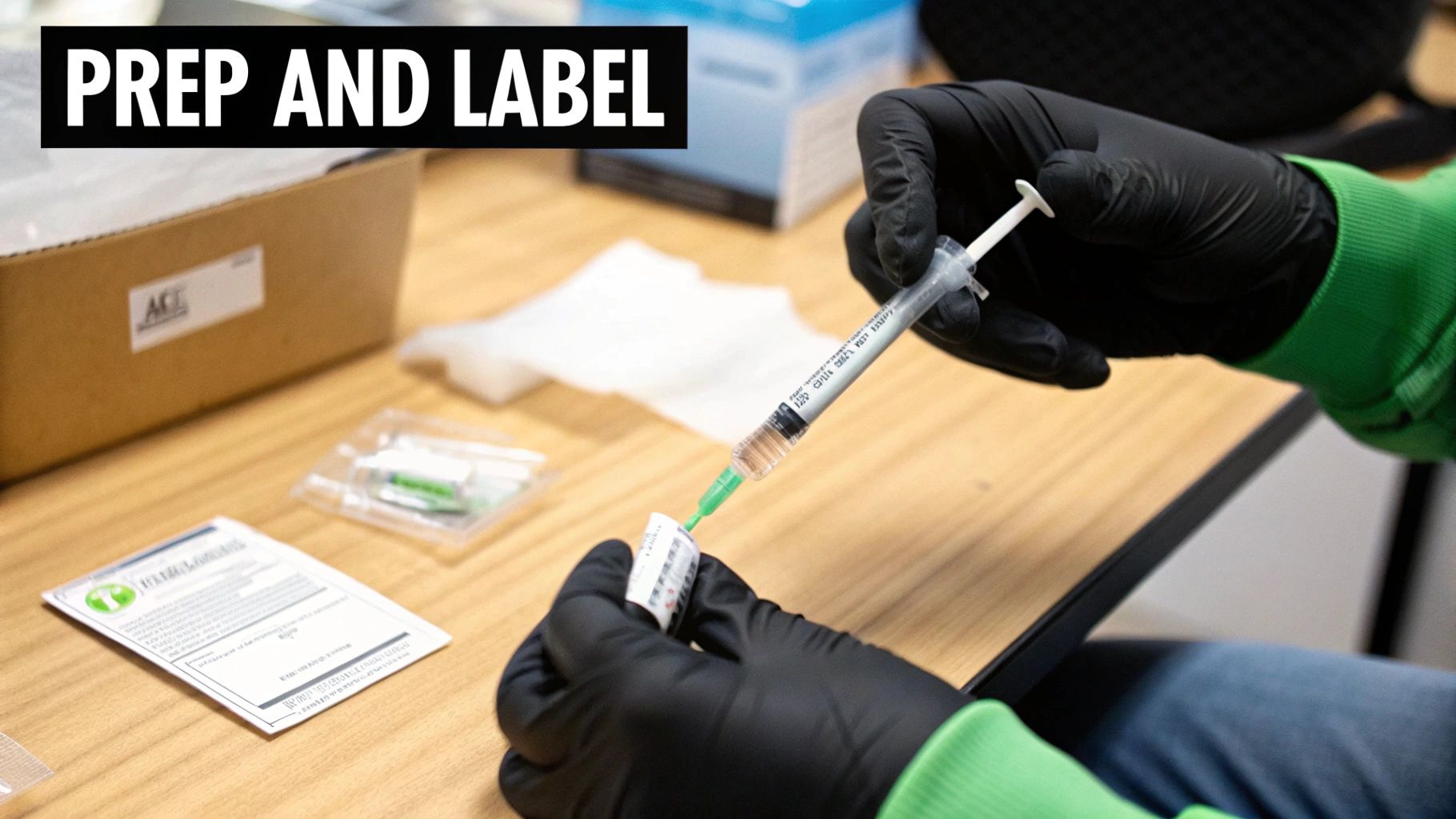
First, conduct a thorough visual inspection of each syringe. Hold it against a light source to examine the contents. A healthy syringe contains a clear solution with dark specks—the spores—which may be floating freely or settled in clumps. Be watchful for any signs of contamination, such as cloudiness, unusual colors, or fuzzy growths.
Next, verify that the Luer-Lok cap on the tip is securely fastened. A loose cap can lead to leakage or, more critically, allow airborne contaminants to compromise the sterile sample.
Sanitization and Accurate Labeling
After confirming the internal contents appear healthy, sanitize the exterior of the syringe. Even if it arrived in a sterile package, it has been handled during shipping.
- Wipe the entire barrel and cap with a 70% isopropyl alcohol swab.
- This step removes surface contaminants that could otherwise be introduced into your clean storage environment.
- Allow the syringe to air-dry completely before proceeding.
Proper labeling is a crucial organizational step, especially when working with multiple species for taxonomic comparison. A clear label prevents confusion and ensures accurate record-keeping.
A good label prevents significant research errors later. At a minimum, it should include the species name (e.g., Psilocybe cubensis), the date of acquisition, and a unique identifier if you have multiple syringes of the same strain.
Selecting the Right Storage Container
Finally, choose an appropriate container for refrigeration. Do not simply place loose syringes in a refrigerator drawer, where they can be subjected to physical damage or exposure to spills.
The best practice is to place the sanitized and labeled syringes into a clean, sealable plastic bag or a small, airtight container. This provides an additional barrier against humidity fluctuations and potential cross-contamination. These careful preparations create a stable and sterile environment, which is fundamental to preserving the long-term viability of your spore specimens.
For more information on our commitment to providing sterile, high-quality products, please visit our About page. All spores are sold for microscopy and taxonomy research purposes only. Cultivation is not permitted where prohibited by law.
The Science of Preserving Spore Viability
Understanding the biological principles behind spore storage helps clarify why specific conditions are so important. Mushroom spores are biological marvels—self-contained reproductive units in a state of deep dormancy. They contain all the genetic information necessary for future growth, with their metabolic processes slowed to a near standstill. The goal of storage is to maintain this dormant state for as long as possible.
Why Cold Temperatures Are Essential
The primary function of refrigeration is to slow the spores’ metabolic rate. By placing a spore syringe in a cold environment, you drastically reduce its internal biological activity. This means the spores consume their finite energy reserves at an extremely slow pace, extending their viability significantly.
Think of a syringe left at room temperature as a vehicle with its engine idling—it is slowly but consistently consuming fuel. Placing it in the refrigerator is akin to turning the engine off, preserving that fuel for when it is needed.
The Threats of Light and Contamination
Temperature is only one factor. Light, particularly UV radiation from the sun, poses a significant threat. UV rays can penetrate the syringe and damage the DNA within the spores, rendering them non-viable for research. Storing them in darkness, either within an opaque bag or a dark section of the refrigerator, is essential.
Sterility is the final pillar of preservation. The sterile water in the syringe is an ideal medium for spores, but it is also a hospitable environment for bacteria and molds. These microbial competitors are ubiquitous and can quickly colonize a sample if given the opportunity. Keeping the syringe sealed and stored in a clean container is the best defense against such contamination.
Ultimately, successful spore preservation hinges on controlling three factors: temperature, light, and sterility. Mastering these elements ensures your specimens remain viable and pure.
Decades of mycological research, including data referenced by organizations like the University of Minnesota Extension, support this methodology. The ideal storage range of 2°C to 8°C (36°F and 46°F) can preserve spore viability for up to a year or longer. Conversely, temperatures above 10°C (50°F) can cause viability to decline rapidly. This scientific consensus is why refrigeration is the standard for serious mycology research. You can find more detail about how conditions affect spore viability on Mycotown.
While spores are a primary tool for mycologists, they are not the only option. To understand how they compare to other methods, see our guide on liquid culture vs. spore syringes, which details their different storage needs and applications.
All spores are sold for microscopy and taxonomy research purposes only. Cultivation is not permitted where prohibited by law.
Common Storage Mistakes to Avoid
Even with the best intentions, simple mistakes can compromise an entire spore specimen. Understanding what not to do is as critical as following proper procedure. Avoiding these common pitfalls is key to protecting your investment in high-quality research materials.
Many researchers learn these lessons through trial and error, but with foresight, you can prevent the loss of valuable samples.
Mistake 1: Freezing Spore Syringes
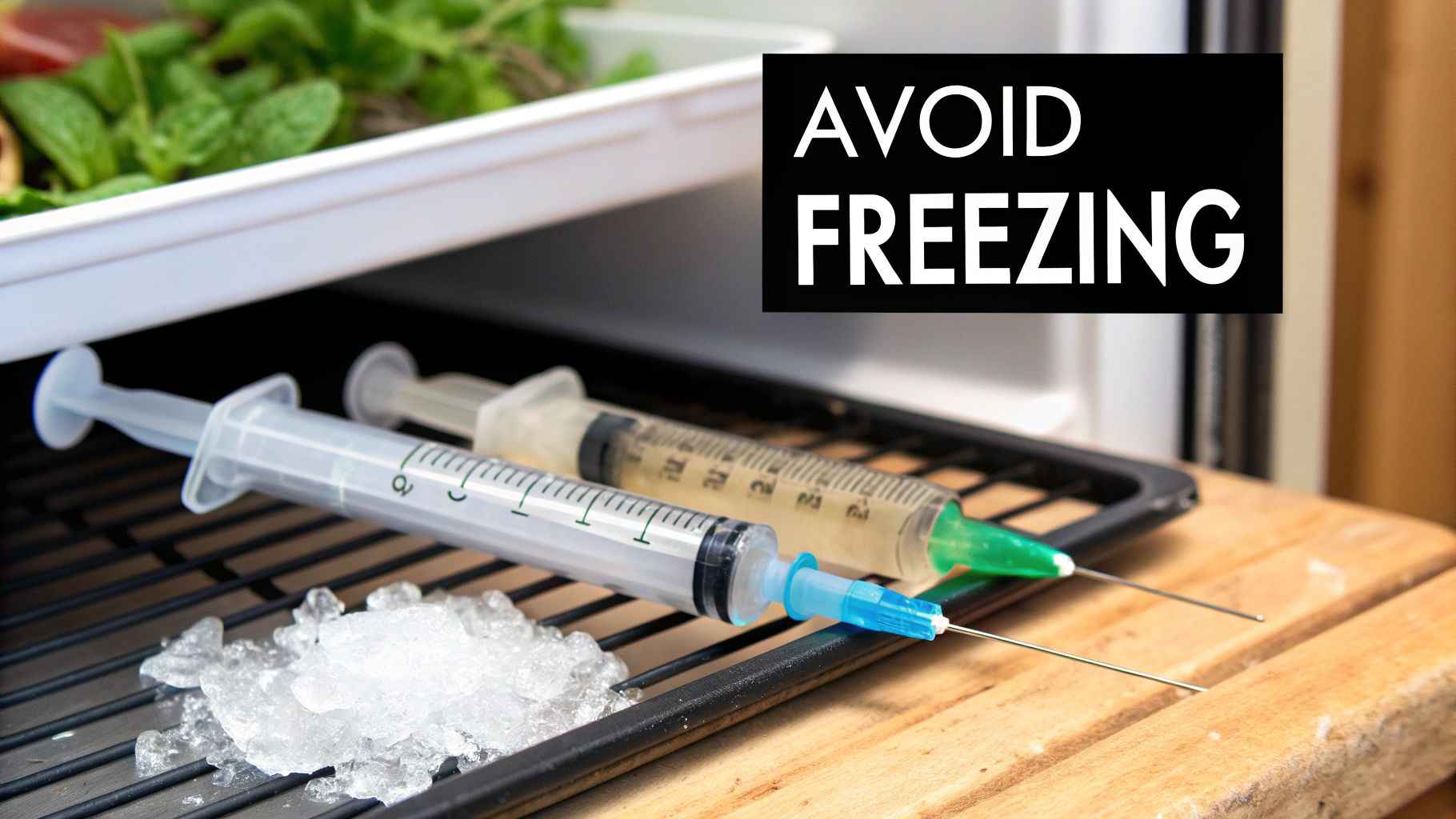
The single most destructive mistake is placing spore syringes in a freezer. While it may seem that colder is better, freezing is fatal to spores.
When the sterile water inside the syringe freezes, it expands and forms sharp ice crystals. These crystals act like microscopic daggers, piercing and shredding the delicate cell walls of the spores. This process, known as cell lysis, causes irreversible damage and renders the specimen completely non-viable.
Key Takeaway: A refrigerator provides the ideal cold-but-not-frozen environment. Never store spore syringes in a freezer.
Mistake 2: Storing Syringes in the Refrigerator Door
Storing syringes in the refrigerator door is another common error. While convenient, the door is the least temperature-stable part of the appliance.
Each time the refrigerator is opened, the shelves in the door are exposed to warm ambient air, causing significant temperature fluctuations. This constant thermal cycling stresses the spores and can shorten their viable lifespan. For optimal stability, place your syringes in the main body of the refrigerator, preferably toward the back, where the temperature is most consistent.
Mistake 3: Overlooking Contamination Risks
Contamination can be introduced through simple oversights, undermining your storage efforts.
Here are a few common vectors for contamination:
- Poor Labeling: An unlabeled or incorrectly marked syringe can lead to catastrophic mix-ups in research. Always label each syringe clearly with the species (e.g., Psilocybe cubensis), acquisition date, and a unique identifier.
- Improper Sealing: Always double-check that the Luer-Lok cap is screwed on tightly. Furthermore, ensure your external storage bag or container is completely sealed to prevent airborne contaminants from entering.
- Reusing Storage Bags: To avoid cross-contamination, always use a fresh, sterile storage bag for new syringes. Reusing bags, even if they appear clean, carries an unnecessary risk.
By avoiding these critical mistakes, you give your spores the best possible chance to remain pure and viable for your microscopy studies.
All spores are sold for microscopy and taxonomy research purposes only. Cultivation is not permitted where prohibited by law.
How to Identify a Contaminated Spore Syringe
Even with meticulous storage, contamination can occasionally occur. Knowing how to identify a compromised syringe is a fundamental skill for any researcher, as it prevents wasting time and materials on a non-viable sample.
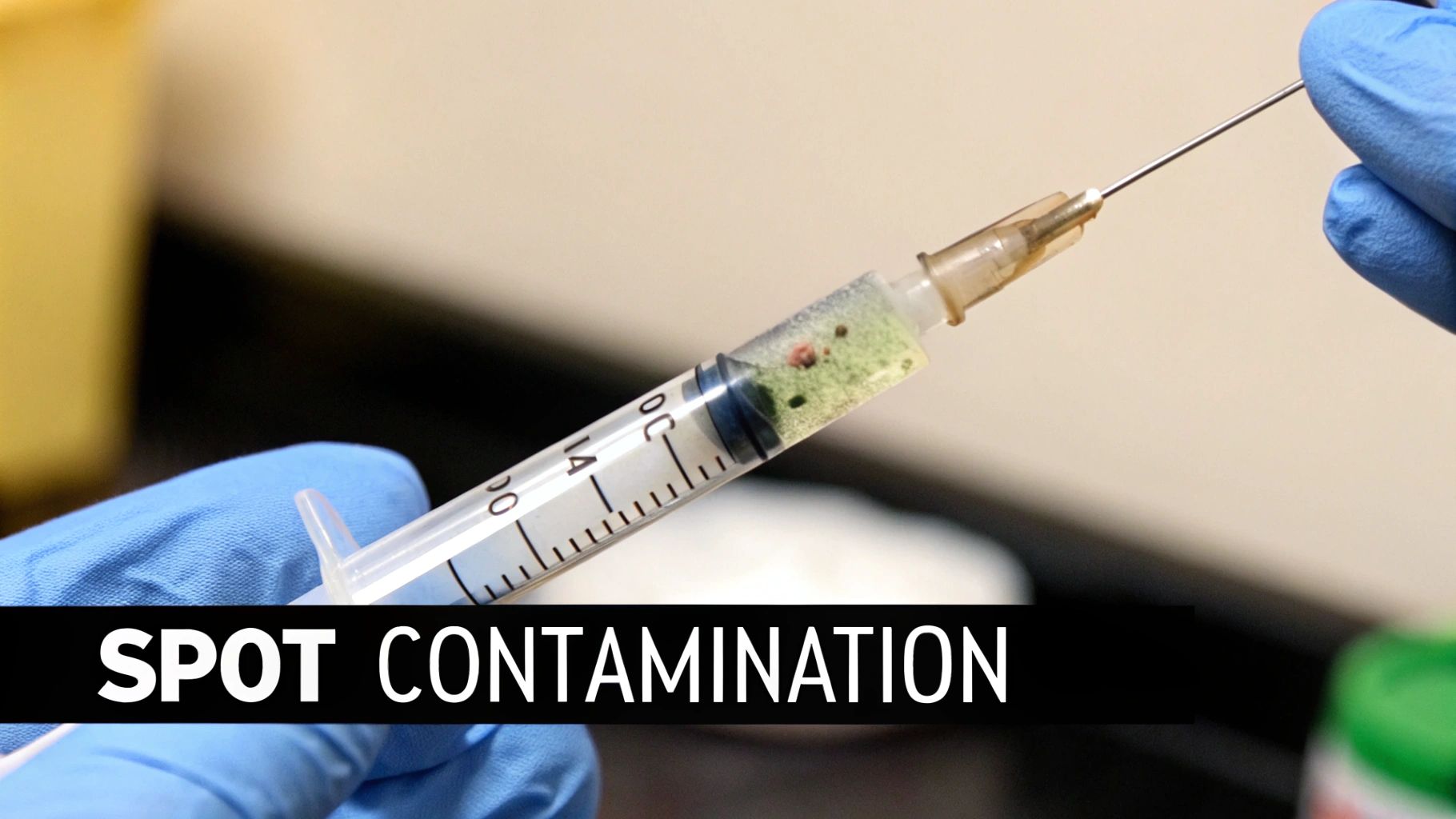
A healthy, viable spore syringe should contain sterile, transparent water with visible dark specks—the spores. It is normal for these spores to aggregate into dark clumps; this is not a sign of contamination.
Telltale Signs of Contamination
When inspecting a syringe, you are looking for any visual anomalies beyond clear water and dark spore clusters. Microbial contaminants like bacteria or mold will almost always produce visible evidence of their presence.
Look for the following red flags:
- Cloudy or Murky Liquid: This is the most common indicator of contamination. If the solution appears milky, hazy, or opaque, it likely contains a bacterial bloom.
- Discoloration: The water should be colorless. Any yellow, green, or brownish tint suggests the growth of foreign organisms.
- Fuzzy or Stringy Growths: Visible mold often appears as floating fuzzy spots (white, green, or black) or slimy, stringy filaments that look distinctly different from solid spore clumps.
In addition to visual cues, a sour, musty, or otherwise “off” odor upon opening the syringe is a definitive sign of contamination. If you suspect a syringe is compromised, the safest course of action is to discard it. Attempting to use a contaminated sample will lead to unreliable and frustrating results. Our guide on how to view spores under a microscope offers tips for preparing clean, high-quality slides.
Healthy vs. Contaminated Syringe Comparison
This table summarizes the key visual differences between a healthy and a contaminated spore syringe.
| Characteristic | Healthy Syringe | Signs of Contamination |
|---|---|---|
| Liquid Clarity | Crystal clear, transparent | Cloudy, milky, or murky |
| Spore Appearance | Dark specks or dense clumps | Fuzzy growths (white, green, black) |
| Color | Colorless water | Yellow, green, or brown tints |
| Consistency | Water-like | Slimy strands or visible sediment |
Identifying contamination becomes easier with experience. However, prevention through proper sterile technique and storage remains the best strategy. Data from mycological suppliers shows that over 80% of spore syringes stored correctly between 2°C and 8°C remain viable and contaminant-free after six months.
All spores are sold for microscopy and taxonomy research purposes only. Cultivation is not permitted where prohibited by law.
Frequently Asked Questions About Storing Spore Syringes
Here are answers to some of the most common questions we receive from amateur mycologists and researchers.
Can spore syringes go bad during shipping?
This is a common concern, but fortunately, it is rarely an issue. Spore syringes are robust and can typically withstand several days or even a week in transit without any loss of viability. The spores are in a dormant state and are resilient to moderate temperature shifts. The primary risk would be prolonged exposure to extreme heat, such as being left in a hot mailbox in direct summer sun for an entire day. Once your package arrives, you should inspect the syringes and transfer them to proper cold storage as soon as possible to maintain their peak condition.
Should I shake a spore syringe before storing it?
No, shaking is not necessary before storage. It is perfectly normal for spores to settle and form dark clumps at the bottom of the syringe over time. This does not harm them. The appropriate time to shake the syringe is immediately before you prepare a microscope slide. A vigorous shake for 30-60 seconds will break up the spore clumps and distribute them evenly throughout the sterile solution, ensuring you get a dense, representative sample for observation. Our guide on how to properly view spores under a microscope covers this preparation step in detail.
Can you grow mushrooms from these spores?
This question highlights the critical importance of legal and ethical compliance in mycology. While spores contain the genetic blueprint to produce mycelium and mushrooms, the spores themselves do not contain psilocybin or other psychoactive compounds. For this reason, their sale and possession for microscopy and taxonomic purposes are legal in most jurisdictions.
However, the act of germinating these spores is illegal in many countries and states. Once germinated, the resulting mycelium can produce psilocybin, which is a controlled substance. It is your responsibility to understand and adhere to the laws in your specific location. You can find more information on our legality and compliance page.
All spores are sold for microscopy and taxonomy research purposes only. Cultivation is not permitted where prohibited by law.
Ready to begin your mycology research with premium, lab-verified specimens? Explore our diverse selection of spore syringes, perfect for taxonomic study and microscopic observation.
Explore our spore syringe collection for microscopy research